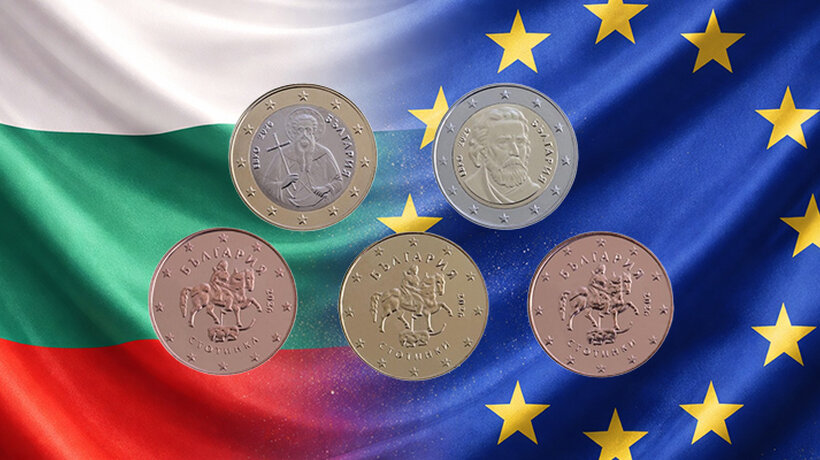
Bulgaria adopts the euro from January 1, 2026, becoming the 21st country in the eurozone. The EU Council has already approved the conversion rate: 1 € = 1.95583 BGN, which corresponds to the long-maintained central rate of the lev in ERM II. The transition will thus build on the existing monetary regime, changing more the "name" of the currency than its real link to the euro, as the graphics and themes that accompanied the old currency will be preserved on the euro coins.
What will be on Bulgarian euro coins
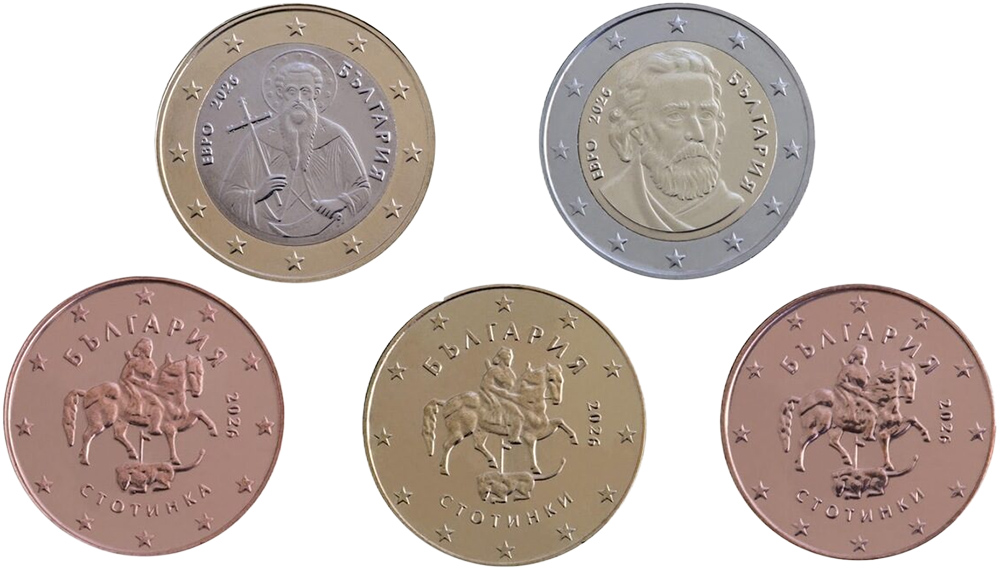
- 1 cent – 50 cents: Madara Rider originates from a medieval rock relief near the village of Madara in northeastern Bulgaria (near Shumen). It is a work from the time of the First Bulgarian Empire (8th century), carved into the rock massif of the Madara Plateau. It depicts a rider spearing a lion, accompanied by a dog. This 2.6-meter-high relief is not distinguished by a wealth of details but by its location. It is situated 23 meters above the ground on an almost vertical cliff and was carved nearly 1300 years ago. The relief is listed in UNESCO and has become one of Bulgaria's main national symbols – hence the motif is used on their (future) euro coins 1c–50c.
- 1 €: St. Ivan Rilski – patron of Bulgaria and founder of the Rila Monastery. The Rila Monastery is the largest and perhaps the most famous monastery of the Orthodox Church in Bulgaria, covering an area of 8,800 m². It is located in the northwestern part of the Rila Mountains. It was founded in the 10th century and is one of the most significant monuments in all of Bulgaria.
- 2 €: Paissiy Hilendarski – author of the famous "Slavonic-Bulgarian History" and spiritual awakener. In Bulgaria, he is perceived as the "father of the nation." His most important work is the book Istorija Slavjanobolgarskaja from 1762, the second modern scientific historical book about Bulgarian history.
On the edge of the 2-euro coin will be the inscription "БОЖЕ ПАЗИ БЪЛГАРИЯ" ("God, protect Bulgaria"). All national sides will bear the name of the country in Cyrillic "БЪЛГАРИЯ" and the issue 2026.
How the idea was born and why these motifs
The Bulgarian National Bank (BNB) formally confirmed on April 9, 2025, that the euro national sides will adopt motifs from today's lev coins: Madara Rider, St. Ivan Rilski, and Paissiy Hilendarski. The reason is twofold – continuity and recognizability. These are symbols that are "fixed" in the country, and the public perceives them as natural representations of Bulgarian identity; thus, the transition to the euro will not evoke a sense of "loss of face" on everyday currency.
Interestingly, Bulgaria will become the first EU member country to have saints as a motif on regular circulating euro coins (1 € and 2 €). It is unique within the Union – although the euro is also used by states outside the EU (e.g., Vatican), no similar precedent has existed in member countries until now.
When people will actually get the coins
BNB announced that starter kits with coins bearing the Bulgarian national side began selling from December 1, 2025 in BNB cash centers, selected banks, and "Bulgarian Posts" branches. The goal is to prepare the public and traders for a smooth transition.
Summary for collectors
- Designs are officially approved and follow today's lev coins.
- 2 € with the edge inscription "БОЖЕ ПАЗИ БЪЛГАРИЯ" will likely be the most sought-after "national" denomination for thematic collections.
- The conversion rate is fixed: 1 € = 1.95583 BGN – good news for those comparing denominations and prices between the lev and the euro.